Why Some Horses Sell Fast (and Others Don’t)
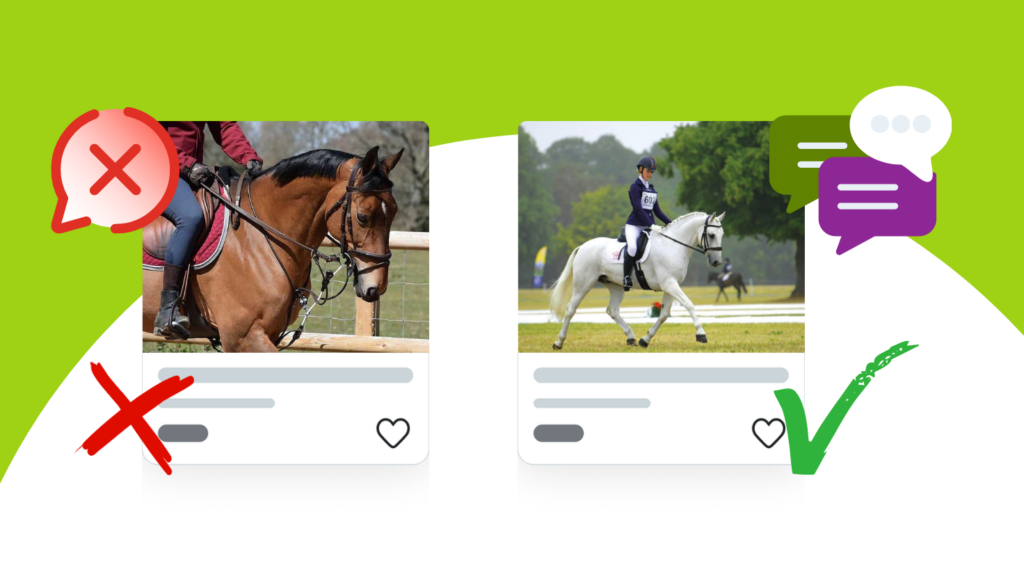
You’ll put two similar horses up at similar prices. One gets enquiries within 48 hours and the other barely gets a message.
Same type of horse, same kind of money, but a different outcome. Most of the time, it’s not the horse.
It’s what happens in the first few seconds of someone seeing the advert. Buyers aren’t reading listings carefully. They’re flicking through quickly, usually on a phone, often with several tabs open. The decision of whether to click, let alone enquire, happens in a few seconds.
It tends to go: photo, price, first two lines, then a quick comparison against a couple of others. If something feels off at any of those points, they move on.
That’s where most enquiries are lost.
The common thread isn’t poor horses, it’s hesitation points. Small gaps in how they’re presented that give a buyer just enough reason to pause or move on.
Buyers decide whether to click before they’ve read a single word. If the first image is dark, awkwardly cropped, or taken in a cluttered yard, most people won’t give it a second chance.
The listings that get opened consistently tend to share a few things: a clean side-on shot, decent natural light, a simple background, and a horse that looks settled. That’s not about professional photography. It’s about showing the horse clearly and quickly.
For yards with regular turnover, it’s worth having a consistent setup, same spot and same approach, so photos across all your listings look coherent. That alone gives a business listing a more polished feel, even before anyone reads the description.
Buyers are always comparing. Not just “is this cheap or expensive” but “does this make sense against everything else I’ve looked at today?”
A price that’s there but unexplained makes people hesitate. No price at all, and most will skip entirely, but a price that’s supported by a clear sense of what the horse has done and what it’s suitable for tends to convert.
For dealers especially, this matters at a portfolio level. If a buyer is looking at three of your horses at once, you want each one to feel like it justifies its price, not leave them second-guessing.
Buyers are trying to answer one thing: is this the right horse for me?
That means experience, temperament, and realistic rider level are clear straight away. A description that’s long on detail but slow to get there tends to lose people before they find the answer.
The adverts that work aren’t always the longest. They’re the ones where a buyer can quickly understand and feel confident enough to enquire.
This is the one that’s easy to miss, but it’s often where things go wrong.
Missing video, vague wording around quirks, or no mention of routine. None of these are dealbreakers on their own, but together they give a buyer enough reason to look elsewhere.
For yards selling regularly, it’s worth thinking about this as a process. Not every listing needs to be perfect, but every listing should feel complete.
The advert is only part of it. What happens before it goes live matters too.
Horses kept in a normal routine come across better at viewings because they behave more predictably. The basics, such as catching, leading, standing to be tacked up, all carry real weight.
That’s often what turns an enquiry into a sale.
For yards moving horses regularly, it’s about consistency. A steady standard across photos, listings, and viewings tends to build trust and make future sales easier.
April brings more buyers, and more listings. More choice, more competition, and buyers who are moving quickly.
That’s when how your listings come across starts to matter more.
Not just individual adverts, but how your horses look as a whole, how easy you are to find, and how credible you seem at a glance.
This is where PRO Business makes a practical difference.
It’s not a magic fix, but when buyers are making quick decisions, those small advantages add up.
If you want to see what separates listings that get enquiries from the ones that don’t, we broke this down in the Guide to Selling using real examples – what gets clicked, what gets ignored, and why.
The same pattern shows up whether you’re selling one horse or twenty: buyers make quick decisions with limited information, and the listings that reduce doubt early tend to win.
For yards working at volume, getting that consistency right across your listings is what makes April productive rather than just busy.